BrainHealth Solutions offers the Stanford-developed SAINT® accelerated TMS protocol to Los Angeles patients at our Costa Mesa clinic: one screening call, one evaluation and five consecutive days of fMRI-guided treatment, led by psychiatrist Dr. Robert Bota.

SAINT® (Stanford Accelerated Intelligent Neuromodulation Therapy) is an FDA-cleared, accelerated form of TMS for treatment-resistant depression. Instead of one session a day for six weeks, SAINT® delivers ten short theta-burst sessions a day for five consecutive days, aimed at a target chosen from your own functional MRI. BrainHealth Solutions delivers it with the Magnus Medical Neuromodulation System, the only FDA-cleared system of its kind, and is one of a small number of Southern California practices offering the protocol.
A functional MRI maps the connectivity between your dorsolateral prefrontal cortex and the subgenual cingulate, the circuit most implicated in depression. An algorithm picks the exact spot where stimulation is expected to have the strongest effect, so the target is personal rather than anatomical.
Treatment uses intermittent theta-burst stimulation: about 10 minutes of pulses, ten times a day, spaced roughly 50 minutes apart. The spacing is deliberate; it is what lets a day of SAINT® do the work of weeks of conventional TMS.
Because the dose is compressed into five days, many patients notice change during the treatment week itself rather than a month later. Dr. Bota's team re-scores your symptoms daily so you can see the trajectory.
BrainHealth Solutions has one location, the Costa Mesa clinic at 3151 Airway Ave, Bldg R, Costa Mesa, CA 92626, about an hour south of Los Angeles on the I-405 depending on traffic. There is no Los Angeles office. That distance is exactly why SAINT® is a natural fit for LA patients: standard TMS needs about 30 daily visits over six weeks, while SAINT® asks for one evaluation, a brain-mapping scan and a single treatment week. Patients from across Southern California already make the trip for that reason.

Share your name, contact information and a callback time. The team reviews your treatment history, since SAINT® is for depression that has not improved after prior treatment, and walks you through planning a treatment week away from Los Angeles.
A full psychiatric evaluation at the Costa Mesa clinic with Dr. Bota’s team covering diagnoses, medication trials, medical history and safety screening for TMS. Insurance eligibility and authorization start here.
You complete a short fMRI scan. The Magnus algorithm uses it to compute your individual stimulation target, which is loaded into the neuronavigation system before day one.
Ten theta-burst sessions a day at the Costa Mesa clinic, each about 10 minutes, with breaks between. You are awake throughout; most patients read, work or rest in the suite between sessions.
Symptom scales are repeated after treatment and at follow-up visits. If needed, your clinician plans medication management, psychotherapy or maintenance sessions so the response holds.
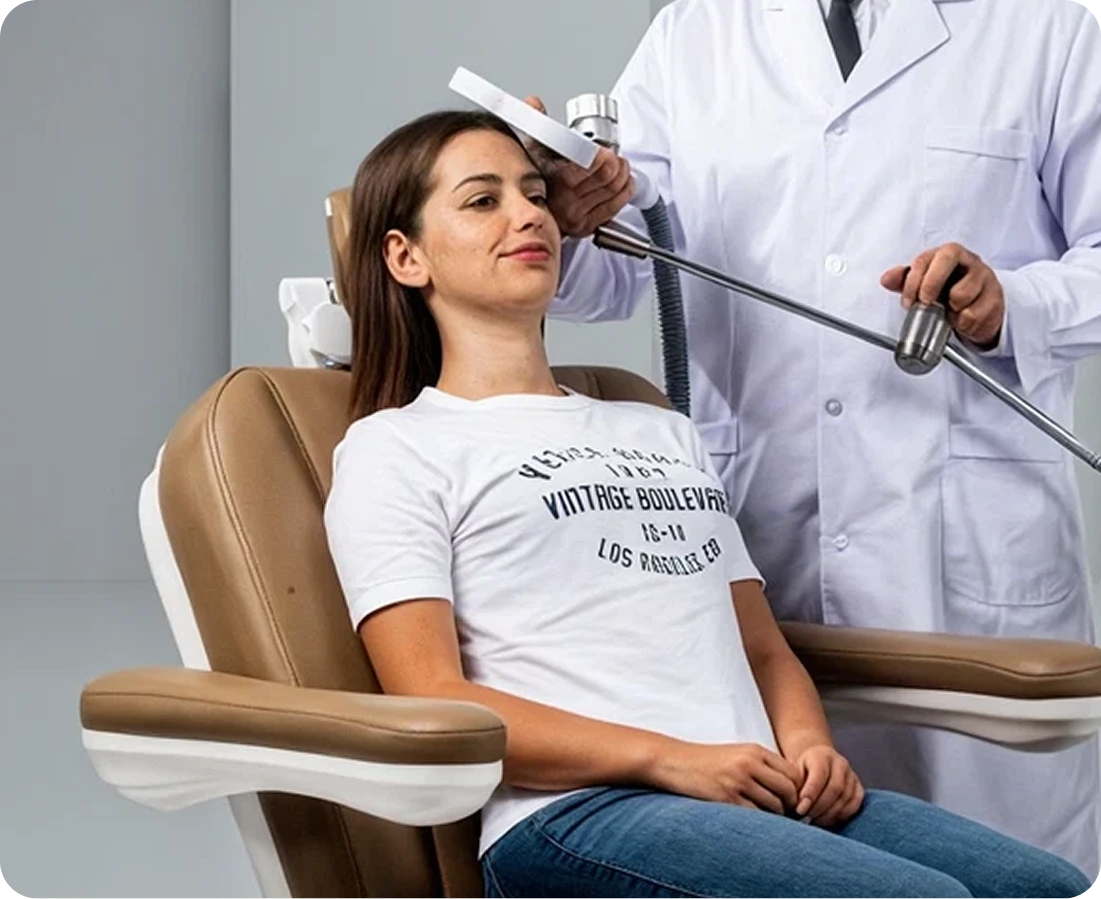
Each treatment day runs most of the business day because of the spacing between sessions. Plan to be in Costa Mesa from morning to late afternoon for five weekdays. Adding about an hour of driving each way from Los Angeles makes for a long day, so some patients stay nearby for the week instead of commuting.
The stimulation itself feels like a brisk tapping on the scalp for about 10 minutes at a time. No sedation is involved, so you can drive yourself and return to normal activity each evening. The breaks between sessions are long enough to answer email or take calls, which helps if you are taking the week off work.
Your care team scores depression symptoms each day. Many patients report mood change within the week; others improve over the following two to four weeks as the effect consolidates.
The SAINT® schedule is fixed by the protocol, all at the Costa Mesa clinic:

SAINT® uses the same magnetic stimulation as standard TMS, so its safety profile is similar. The higher daily dose has not changed that profile in the published trials.
Common and mild
Hearing protection is used in every session. If you plan to drive back to Los Angeles each evening, keep end-of-day fatigue in mind.
Rare
Dr. Bota’s team monitors you across all five days and adjusts intensity if scalp discomfort is significant.
In the Stanford randomized trial that led to clearance, about 79% of participants with treatment-resistant depression reached remission with active SAINT®, compared with 13% on sham. Open-label data showed a similar pattern. These are trial figures, not a guarantee for any individual.
Durability varies. Some patients hold remission for months; others need maintenance TMS, medication adjustments or psychotherapy. BrainHealth Solutions plans that follow-up before you finish the treatment week, including which parts can continue closer to home with your own providers.

SAINT® may be the right option for Los Angeles adults who:
SAINT® is not appropriate for everyone with depression; the fMRI, safety screening and treatment history all determine eligibility. The evaluation settles that before you schedule treatment days or arrange time away from Los Angeles.
Alternatives we offer when SAINT® is not the fit
For Los Angeles patients who have spent years on medications that only partly worked, SAINT® turns a six-week commute into one planned week. One family wrote that Dr. Bota “took time to listen, answer questions, and personalize treatment, and the TMS protocol was highly effective.”
The compressed schedule replaces about 30 daily visits with one treatment week, which is what makes the trip from Los Angeles practical.
Your target is computed from your own brain connectivity, not a scalp measurement. That precision is specific to the Magnus Medical system used at BrainHealth Solutions.
Many participants in the Stanford trials improved within days. Daily symptom scoring at BrainHealth Solutions shows you the change as it happens.
You can drive yourself each day. There is no medication to taper and no systemic side-effect burden.
Dr. Bota founded UC Irvine’s first TMS program and has led more than 20 clinical trials; SAINT® is part of a practice that runs on research, not a standalone device.
If depression returns, you are already a patient of a team that offers standard TMS, Spravato®, medication management and psychotherapy.
SAINT® was designed and tested specifically for treatment-resistant depression, and its speed makes it relevant when depression is severe and waiting six weeks is not acceptable. If you have been told to “give the medication more time” after several failures, a screening call with BrainHealth Solutions is the fastest way to find out whether you qualify, before you plan any travel.
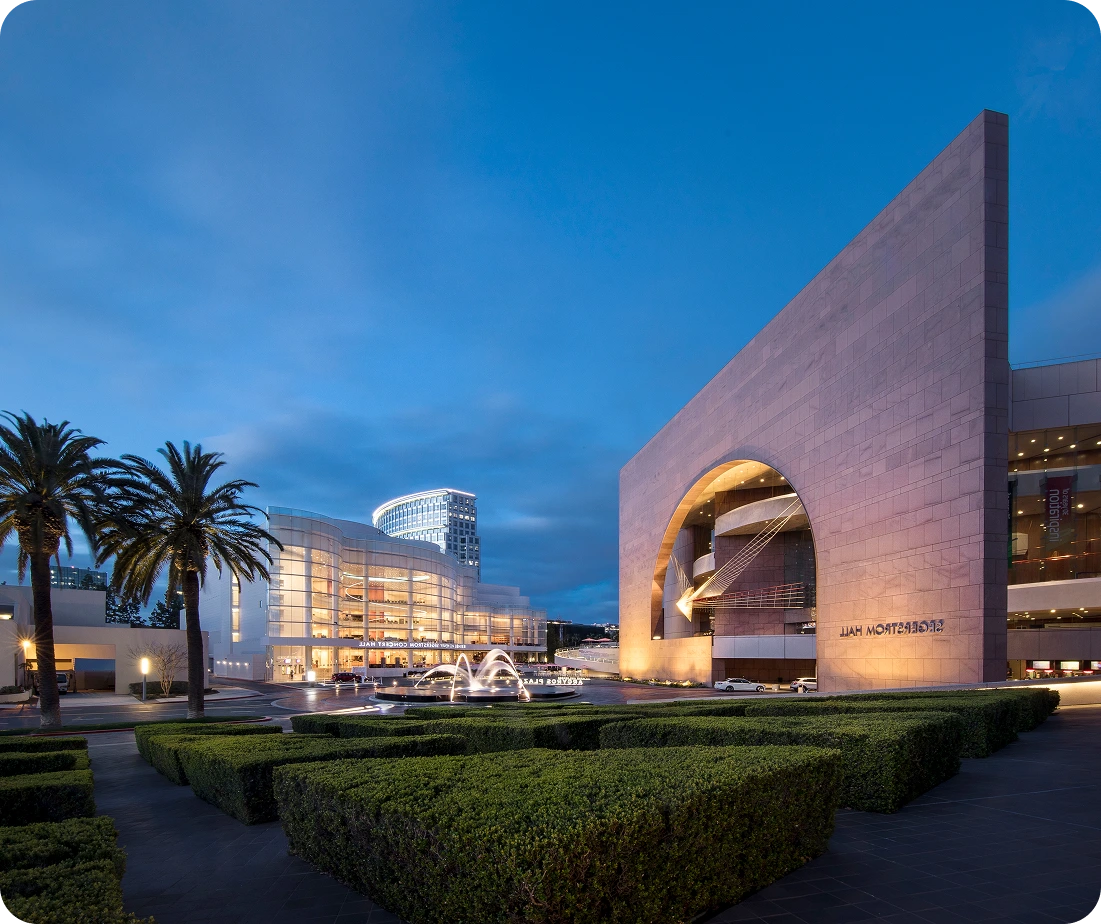
The cost of SAINT® at BrainHealth Solutions typically ranges from $10,000 to $20,000 for the full course, depending on your individual treatment plan and the number of sessions required. The MRI used for SAINT® targeting is covered by our office. Many insurance plans, including Medicare, cover SAINT®, and some patients may be eligible for out-of-network benefits, particularly Blue Shield and Anthem members. CareCredit financing is available. We give you a personal estimate after reviewing your plan and history, so you know the cost before arranging a week in Costa Mesa.
Insurance and financing
BrainHealth Solutions accepts insurance and self-pay. Many major plans are accepted, including Medicare and Anthem, and CareCredit financing spreads self-pay costs over monthly payments. Submit your plan through the insurance-check form on our site, or ask on your 15-minute screening call, and our team confirms what your plan covers before you commit to anything.
Dr. Robert Bota, MD, MSG, DFAPA is a board-certified psychiatrist and Distinguished Fellow of the American Psychiatric Association. He trained in TMS at Harvard University and the University of South Carolina, founded and directed the first TMS program at UC Irvine, and has authored more than 60 peer-reviewed publications.
Dr. Bota has been principal investigator on more than 20 clinical trials in depression, schizophrenia, PTSD and Alzheimer’s disease, and the practice participates in brain-imaging research with Kernel neurotechnology. Treatment plans are informed by that research and reviewed as your symptoms change.
Care at BrainHealth Solutions is delivered by a team that includes psychiatrists Dr. Tina Allee and Dr. Mahtab K. Yousefi (child and adolescent care in English and Farsi), Spravato® specialist Dr. Dragos Serseni, TMS technician Anna Venezio and office manager Peter Bota.
Many plans are accepted, including Medicare and Anthem, and CareCredit financing is available for self-pay. One parent wrote that the team “even helped get insurance coverage when others said it wasn’t possible.” Use the insurance check on our site or ask on your screening call.
In the Stanford randomized controlled trial, about 79% of participants reached remission versus 13% on sham. Response varies by individual, which is why BrainHealth Solutions scores symptoms daily and plans follow-up before treatment ends.
Standard TMS is one session a day for about six weeks with a target set by scalp measurement. SAINT® is ten theta-burst sessions a day for five days with a target computed from your fMRI. BrainHealth Solutions offers both.
Not from BrainHealth Solutions; we have no Los Angeles office. The evaluation, the brain-mapping scan and all five treatment days take place at our one clinic, 3151 Airway Ave, Bldg R, Costa Mesa, about an hour south on the I-405 depending on traffic.
Treatment runs from morning to late afternoon for five consecutive weekdays. Some Los Angeles patients commute; with an hour or more of driving each way, others prefer to stay near the clinic for the week. The office can help you think through either plan.
Plan on an evaluation visit, the brain-mapping step and the five-day treatment week, plus follow-up visits afterward. Ask on your screening call how these steps can be scheduled to limit the number of separate trips from Los Angeles.
Many plans, including Medicare, cover SAINT®, and coverage often requires proof of prior treatment failures. CareCredit financing is available, and the team reviews your benefits before you commit.
In most cases yes. Medication changes, if any, are made by your psychiatrist as part of the overall plan, not as a condition of treatment.
Schedule a 15-minute screening call to find out whether SAINT® Depression Therapy is right for you. One clinic in Costa Mesa, one treatment week, one clinical team throughout.
BrainHealth Solutions, 3151 Airway Ave, Bldg R, Costa Mesa, CA 92626 · (949) 441-5542 · Monday to Friday, 8:30 AM to 5:00 PM. Same-day appointments may be available. The screening call asks only for your name, contact information and a callback time; there are no long intake forms before you speak with us.

