
Transcranial magnetic stimulation, or TMS, may help some people with post-traumatic stress disorder, but it is not FDA-cleared for PTSD, and it is not a first-line treatment. Research on TMS for PTSD shows encouraging early results, especially for people whose symptoms have not improved with therapy and medication. The studies are still small, and treatment methods vary widely from one trial to the next. Today, the strongest use of TMS for someone with PTSD is often treating depression or OCD that occurs alongside the trauma symptoms. TMS is FDA-cleared for both of those conditions.
Patients often search for “TMS for PTSD: Could It Help?” after years of partial relief. This article explains what PTSD is, how it is usually treated, what TMS does in the brain, and what the current evidence does and does not show. It also explains how we at BrainHealth Solutions think about TMS when PTSD is part of a patient’s history.
Before weighing any treatment, it helps to understand the condition itself. PTSD is not a sign of weakness, and it is not simply “stress that will not go away.” It is a recognized psychiatric condition with clear patterns in thinking, emotion, sleep, and the body’s alarm system.

Post-traumatic stress disorder is a mental health condition that can develop after a person experiences or witnesses a traumatic event. Common examples include combat, physical or sexual assault, serious car accidents, natural disasters, sudden loss of a loved one, and medical emergencies. Repeated exposure to trauma also counts. First responders, healthcare workers, and military service members often face this kind of repeated exposure.
Most people feel shaken after a frightening event. Trouble sleeping, jumpiness, and upsetting memories are normal in the days and weeks that follow. For many people, these reactions fade over time. PTSD is diagnosed when symptoms last longer than a month and interfere with daily life, work, or relationships.
PTSD is closely tied to how the brain processes fear. During a threat, the brain’s alarm center, the amygdala, signals danger. The prefrontal cortex, which sits behind the forehead, normally helps calm that alarm once the danger passes. The hippocampus helps file the memory with the right time and place. In PTSD, this system appears to fall out of balance. The alarm fires too easily, the calming signal is weaker, and the memory feels present rather than past.
This brain-based view matters for this article. TMS works by stimulating specific areas of the brain’s surface, including parts of the prefrontal cortex. That is why researchers became interested in whether it could help restore balance in the fear circuit.
PTSD symptoms usually fall into four groups.
Intrusive memories. These include flashbacks, nightmares, and unwanted memories that appear without warning. A sound, smell, or place can trigger a wave of distress that feels as intense as the original event.
Avoidance. People with PTSD often avoid people, places, conversations, or activities that remind them of the trauma. Over time, avoidance can shrink a person’s world. Someone may stop driving, stop going to crowded stores, or pull away from friends.
Negative changes in thinking and mood. This can include persistent guilt, shame, fear, or anger. Many people feel detached from loved ones or lose interest in things they used to enjoy. Some have trouble remembering key parts of the event. Others hold harsh beliefs about themselves, such as “I am broken” or “the world is completely unsafe.”
Changes in arousal and reactivity. This group includes being easily startled, feeling constantly on guard, trouble sleeping, irritability, angry outbursts, and difficulty concentrating. Some people engage in reckless or self-destructive behavior.
PTSD rarely travels alone. Depression is one of the most common conditions that appears alongside it. Anxiety disorders, substance use, chronic pain, and sleep disorders are also common. For veterans, PTSD often overlaps with traumatic brain injury. These overlapping conditions can make PTSD harder to treat, because each one can feed the others.
The impact reaches far beyond the person with the diagnosis. Partners and children may feel the effects of irritability, emotional distance, or disrupted sleep. Careers can stall when concentration suffers or when certain work settings become triggering. Physical health can decline as well, since long-term stress affects the heart, immune system, and metabolism.
The encouraging news is that PTSD is treatable. Many people improve significantly with the right combination of care. Knowing the full range of options is the first step toward finding the right combination.
PTSD treatment usually combines several approaches. A plan often starts with therapy, adds medication when needed, and adjusts over time based on how symptoms respond. Understanding these standard options makes it easier to see where TMS might fit.
Trauma-focused psychotherapy is considered the foundation of PTSD treatment. These therapies help a person process the traumatic memory so it loses some of its emotional power. Several types have strong research support.
Cognitive processing therapy helps people identify and challenge unhelpful beliefs that formed after the trauma. A person who blames themselves for an assault, for example, works through those beliefs with a therapist. The goal is a more accurate and less painful understanding of what happened.
Prolonged exposure therapy gradually and safely helps a person approach memories, feelings, and situations they have been avoiding. Through repeated, guided exposure, the brain learns that the memory is not the same as the danger. Fear responses tend to weaken over time.
Eye movement desensitization and reprocessing, or EMDR, asks a person to recall the traumatic memory while following a guided pattern of eye movements or other back-and-forth stimulation. Many people find that the memory feels less vivid and less distressing after a course of EMDR.
Written exposure therapy is a shorter approach that asks a person to write about the trauma during structured sessions. It can appeal to people who want a briefer course of treatment.
Supportive counseling, group therapy, and couples or family therapy can also help. These approaches can address the relationship strain and isolation that often come with PTSD.
Therapy works well for many people, but it is demanding. Trauma-focused work requires facing painful memories, and some people stop before they finish. Others complete therapy and still have lingering symptoms, especially when depression is also present. This is one reason researchers continue to look for treatments that could make therapy more effective or easier to tolerate.
We offer Psychotherapy as part of a broader treatment plan, so therapy and other options can work together.
Medication can reduce PTSD symptoms and make daily life more manageable. It can also make it easier for a person to engage in therapy.
SSRIs, or selective serotonin reuptake inhibitors, are the most common medications for PTSD. Sertraline and paroxetine are the two medications FDA-approved specifically for PTSD. Other SSRIs and the SNRI venlafaxine are also commonly used. These medications can ease intrusive thoughts, low mood, anxiety, and irritability.
Prazosin is sometimes prescribed off-label to reduce trauma-related nightmares. Results vary from person to person.
Other medications may be used to target specific symptoms, such as sleep problems or co-occurring depression. Benzodiazepines are generally not recommended for PTSD.
Medication has real limits. SSRIs often take several weeks to show benefit. Some people experience side effects such as nausea, weight changes, sexual side effects, emotional numbness, or sleep disruption. Many people improve only partly. When someone has tried two or more medications without enough relief, it may be time to look at other options.
Careful Medication Management means reviewing what has been tried, how well it worked, and which side effects made it hard to continue. That history shapes every next step.
Beyond standard therapy and medication, several other approaches play a role in PTSD care.
Treating co-occurring conditions is often essential. If depression is severe, it can drain the energy and motivation needed for trauma-focused therapy. Treating depression directly can open the door to deeper PTSD work. The same is true for substance use and sleep disorders.
Sleep-focused treatment, such as cognitive behavioral therapy for insomnia, can improve rest. Better sleep often eases irritability and concentration problems.
Lifestyle supports, including regular physical activity, consistent routines, and social connection, are not a replacement for treatment. They can, however, strengthen the results of formal care.
Emerging treatments are an active area of research. Several brain stimulation methods, ketamine-based treatments, and other approaches are being studied for PTSD. These are not standard care for PTSD at this time. TMS falls into this emerging category when it comes to PTSD specifically.
When standard treatments help only partly, patients and families understandably start asking about newer options. TMS comes up often in those conversations.
TMS has become an established treatment in psychiatry over the past two decades. Understanding how it works helps explain why researchers are studying it for PTSD.

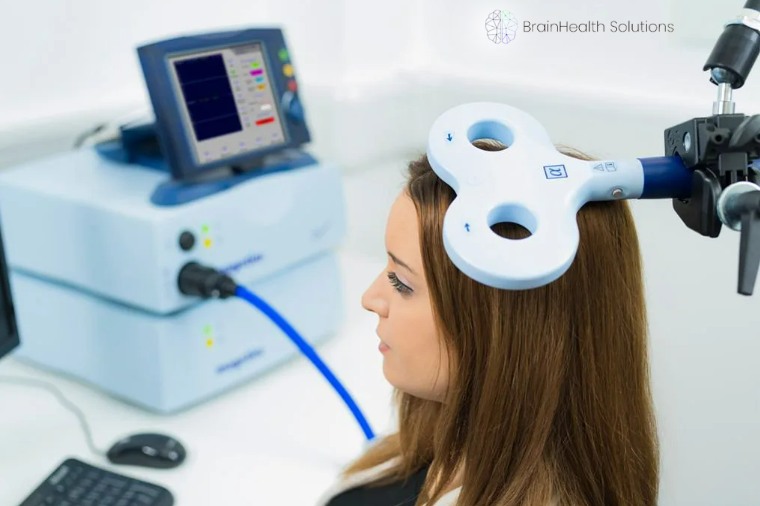
Transcranial magnetic stimulation is a non-invasive brain stimulation treatment. “Transcranial” means “through the skull.” A treatment coil rests against the scalp and delivers magnetic pulses to a targeted area of the brain. These pulses pass painlessly through the skull and create small electrical currents in nerve cells near the brain’s surface.
TMS does not require anesthesia or sedation. There is no surgery, no implant, and no medication involved. Patients stay awake and alert during each session. Most people return to normal activities right away, including driving.
When TMS is given as a series of repeated pulses, it is often called repetitive TMS. Over a course of treatment, these repeated sessions are thought to change how brain networks communicate.
TMS is FDA-cleared for major depressive disorder and for obsessive-compulsive disorder. It is also cleared for smoking cessation. It is not FDA-cleared for PTSD. When TMS is used specifically to treat PTSD symptoms, it is considered off-label.
At BrainHealth Solutions, we provide TMS therapy using the Magventure TMS system. We also offer the SAINT Protocol, an accelerated, MRI-guided form of TMS for treatment-resistant depression.
Mental health conditions are increasingly understood as problems in brain networks, not only in brain chemicals. In depression, for example, an area called the left dorsolateral prefrontal cortex tends to be underactive. This area helps with mood regulation, planning, and emotional control. Standard TMS for depression stimulates this area to increase its activity. Over time, the effect spreads through connected networks, including deeper regions involved in mood.
Different settings can have different effects. High-frequency stimulation tends to increase activity in the targeted area. Low-frequency stimulation tends to quiet it. Providers can also adjust where the coil is placed and how strong the pulses are. This flexibility is part of what makes TMS appealing for research into other conditions.
TMS works through a different route than medication. Antidepressants travel through the whole body and affect brain chemistry broadly. TMS acts on a specific brain region. Because of this, it avoids many systemic side effects common with medication, such as weight gain or sexual side effects.
A standard course of TMS for depression typically involves sessions five days a week for about six weeks. Accelerated protocols such as SAINT compress treatment into a much shorter period by delivering several sessions per day.
So why PTSD? The brain areas TMS can reach include parts of the prefrontal cortex that help regulate fear and the amygdala. If TMS can strengthen the brain’s “calm down” signals, it might help reduce the over-active alarm response seen in PTSD. That idea drives much of the current research.
This is the central question of this article, and it deserves a careful, honest answer. TMS shows promise for PTSD, but the evidence is still developing, and it is not an FDA-cleared PTSD treatment.
Research on TMS for PTSD has grown steadily. Dozens of clinical trials have tested TMS in people with PTSD, including veterans, civilians, and survivors of different types of trauma. When researchers pool these studies together, the overall picture suggests that active TMS reduces PTSD symptoms more than sham, or placebo, treatment.
Several patterns appear in the research.
Symptom improvement across clusters. Some studies report improvement in intrusive memories, avoidance, and hyperarousal. Others find the clearest benefits in mood and anxiety symptoms that occur alongside PTSD.
Different targets and settings. Researchers have tested stimulation on both the right and left sides of the prefrontal cortex. Some trials used high-frequency stimulation, and others used low-frequency stimulation. Both approaches have shown benefit in some studies. There is no agreed-upon “standard” PTSD protocol yet.
Combination with therapy. Some research has paired TMS with trauma-focused psychotherapy, such as cognitive processing therapy. The idea is that TMS may prime the brain to learn and process more effectively during therapy. Early results from this combined approach are encouraging.
Benefit for co-occurring depression. Many people with PTSD also have depression. TMS has strong evidence for depression, and treating depression can improve overall functioning and quality of life. For some patients, this may be where TMS offers the clearest value.
The research also has real limitations. Many trials are small, sometimes with only a few dozen participants. Methods differ greatly, which makes it hard to compare results. Long-term follow-up is limited, so it is not yet clear how long benefits last. Some studies have not found a meaningful difference between active and sham treatment.
Taken together, the evidence is promising but not conclusive. TMS for PTSD is a reasonable area of research and discussion. It is not yet a proven, standardized PTSD treatment in the way trauma-focused therapy and SSRIs are.
TMS is not FDA-approved or FDA-cleared for the treatment of PTSD. This is an important point for anyone considering it.
TMS devices are FDA-cleared for major depressive disorder, for obsessive-compulsive disorder, and for smoking cessation. Using TMS to target PTSD symptoms directly is an off-label use. Off-label use is legal and common in medicine, but it means the treatment has not gone through the specific FDA review process for that condition.
This distinction has practical meaning. A person with PTSD who also has major depression may receive TMS for the depression, which is an FDA-cleared use. Any improvement in PTSD symptoms in that situation would be a possible added benefit, not the cleared purpose of the treatment.
For people with PTSD alone, without depression or OCD, TMS would be considered off-label and investigational. In that situation, patients should have a detailed conversation with a psychiatrist about the current evidence, the uncertainty, and the alternatives.
We believe patients deserve clear information on this point. Understanding FDA status helps patients set realistic expectations and make informed decisions. Weighing them honestly is part of good care.
Potential benefits:
Non-invasive. TMS requires no surgery, anesthesia, or sedation.
No systemic medication side effects. TMS does not cause the weight gain, sexual side effects, or emotional blunting that some people experience with medication.
Targeted action. TMS acts on specific brain regions involved in mood and emotional regulation.
Strong evidence for depression. For patients with PTSD and co-occurring depression, TMS has a well-established track record for the depression itself.
Possible synergy with therapy. Early research suggests TMS may help some patients get more out of trauma-focused therapy.
Minimal recovery time. Most people return to work, school, or daily routines right after each session.
Limitations and considerations:
Because the evidence is still developing, there is no guarantee TMS will reduce PTSD symptoms.
Off-label status. TMS is not FDA-cleared for PTSD.
Time commitment. Standard TMS involves frequent sessions over several weeks.
Common side effects. Headache, scalp discomfort, and facial muscle twitching are common, especially early in treatment.
Possible discomfort for trauma survivors. The clicking sound, physical contact with the coil, and sitting still can feel uncomfortable for some people with PTSD. Pacing and clear communication can help. That is why an individual evaluation matters more than any general rule.
TMS is understood as one option within a broader treatment plan, not a replacement for proven care. Comparing it to medication and therapy shows where it may fit.

Medication and TMS work in very different ways.
How they work. Medications such as SSRIs circulate throughout the body and adjust brain chemistry broadly. TMS directly stimulates targeted brain regions using magnetic pulses.
Evidence for PTSD. Sertraline and paroxetine are FDA-approved for PTSD and have a long research history. TMS is not FDA-cleared for PTSD, and its evidence is still emerging.
Side effects. Medication side effects can include nausea, weight changes, sexual side effects, sleep changes, and emotional numbness. TMS side effects are usually limited to headache, scalp discomfort, and temporary twitching during sessions.
Time to effect. SSRIs often take four to eight weeks to show benefit. Standard TMS for depression also takes several weeks, though some people notice changes earlier. Accelerated protocols such as SAINT can work faster for treatment-resistant depression.
Commitment. Medication involves taking a pill daily, often for months or longer. TMS requires frequent clinic visits during a defined course of treatment.
These two options are not either-or choices. Many patients continue their medication while receiving TMS. For someone who has tried two or more medications without enough relief, adding TMS for co-occurring depression may be a reasonable next step. Patients who are struggling with treatment-resistant depression alongside PTSD often fall into this group.
Trauma-focused therapy remains the foundation of PTSD treatment. TMS is not a substitute for it.
What each one does. Psychotherapy helps a person process traumatic memories, change unhelpful beliefs, and build coping skills. TMS changes activity in brain networks. These goals overlap, but they are not the same.
Evidence for PTSD. Cognitive processing therapy, prolonged exposure, and EMDR all have strong research support for PTSD. TMS has promising but limited evidence.
Effort required. Therapy asks a person to actively engage with painful material. TMS sessions are passive. The patient sits in a chair while the device delivers pulses. Some people find TMS less emotionally draining than trauma-focused work.
Working together. The most interesting research may be on combining the two. Some trials suggest TMS could make the brain more receptive to the learning that happens in therapy. In this model, TMS supports therapy rather than replacing it.
For many patients, the realistic question is not “TMS or therapy.” It is “Could TMS help me get more out of the therapy and medication I am already using?” For some people, especially those with significant depression, the answer may be yes.
Knowing what treatment feels like can ease uncertainty. This is especially true for trauma survivors, who often feel safer when they know what is coming.
TMS sessions take place in an outpatient setting. Patients sit in a comfortable treatment chair and remain fully awake. No sedation or anesthesia is needed.
At the start of treatment, a provider determines the right stimulation strength for each patient. This is based on how the brain responds to brief test pulses. The provider also identifies the correct position for the coil on the head. These settings are recorded so treatment is consistent from session to session.
During a session, the coil rests gently against the scalp. Patients hear a clicking or tapping sound with each pulse and feel a tapping sensation on the head. Earplugs are provided to protect hearing. Many patients read, listen to calming audio, or simply rest during treatment.
Session length depends on the protocol. Some modern protocols take only a few minutes, while others take longer. Standard courses typically involve sessions five days a week for several weeks. Accelerated protocols such as SAINT deliver multiple sessions per day over a shorter period.
After each session, most patients resume their usual activities right away. There is no recovery period, and patients can drive themselves.
For people with PTSD, a few adjustments can make the experience more comfortable. Patients can ask the team to explain each step before it happens. They can agree on a signal to pause treatment. They can also ask about starting with lower intensity and building up gradually. A sense of control matters for trauma survivors, and a good treatment team will support it.
TMS is generally well tolerated. Most side effects are mild and tend to fade as treatment continues.
Hearing changes. The clicking sound is loud, which is why ear protection is used every session.
Mood changes. In rare cases, people with bipolar disorder can experience a shift toward mania. Screening for bipolar disorder is part of a careful evaluation.
Who may not be a candidate:
TMS uses strong magnetic fields, so metal near the head is a concern. People with certain implanted devices or metal in or near the head may not be safe candidates. This can include aneurysm clips, cochlear implants, deep brain stimulators, and some other implants.
This point is especially important for veterans and people injured in explosions or accidents. Shrapnel or metal fragments near the head or neck need careful review before TMS is considered. A history of seizures, epilepsy, or significant brain injury also requires a thorough discussion with a psychiatrist.
Patients should share their full medical history, current medications, and any history of head injury.
Not every person with PTSD is a good fit for TMS. Based on current evidence, the people most likely to benefit include:
People with PTSD and co-occurring major depression. TMS is FDA-cleared for depression, and treating depression can improve energy, motivation, and overall functioning.
People with PTSD and co-occurring OCD. TMS is also FDA-cleared for OCD, which sometimes appears alongside trauma symptoms.
People who have tried two or more antidepressant medications without enough relief, or who could not tolerate side effects.
People who have engaged in therapy but still have significant symptoms, especially when depression is limiting progress.
People who prefer to avoid additional medication or who are sensitive to medication side effects.
TMS may be less suitable for people who have metal implants near the head, a seizure disorder, or untreated bipolar disorder. It may also not fit people who cannot commit to the treatment schedule. People in acute crisis need immediate stabilization first. TMS is not an emergency treatment.
The decision always starts with a full psychiatric evaluation. That evaluation looks at symptoms, history, past treatments, physical health, and personal goals.
At BrainHealth Solutions, we see PTSD as one part of a whole person’s brain health. Our approach focuses on careful evaluation, honest information, and treatment plans built around each patient’s history.
Our care is led by Dr. Robert Bota, a Board-Certified Psychiatrist. Learn more Dr. Robert Bota and the work that shapes his clinical approach.
We treat PTSD as a condition that often overlaps with other concerns. Depression, anxiety, OCD, sleep problems, and brain injury frequently appear together. Our evaluation looks at all of these, because the most effective plan addresses the full picture.
Here is how we think about TMS when PTSD is part of a patient’s history:
We are clear about FDA status. TMS is not FDA-cleared for PTSD. We explain this directly to every patient who asks about it. We offer TMS for depression and OCD, the conditions it is FDA-cleared to treat.
We look for co-occurring conditions. Many patients with PTSD also have depression that has not responded to medication. For these patients, TMS for depression is an FDA-cleared option with strong evidence. Improving depression can make it easier to engage in therapy and daily life.
We combine treatments thoughtfully. TMS can work alongside psychotherapy and medication management. For patients with treatment-resistant depression, we also offer Spravato and the SAINT Protocol. Some patients benefit from combining approaches that work through different mechanisms.
We use the Magventure TMS system. Our TMS treatments are delivered with Magventure technology in a supervised clinical setting.
We pay attention to trauma-related comfort. We know that the sounds and sensations of TMS can feel different to someone with a trauma history. Clear explanations and a sense of control are part of how we approach every session.
We support veterans. Military service members and veterans face high rates of PTSD, often alongside brain injury and depression. Our Veterans Mental Health program addresses these overlapping needs. We also pay close attention to safety screening for anyone with a history of blast exposure or metal fragments.
Related reading: Does SAINT TMS Work for Veterans with PTSD? and Could SAINT Work for Bipolar Depression or PTSD? Exploring Early Research
We see patients at our Costa Mesa office and our Los Angeles, CA office. We also serve patients from Newport Beach and Irvine.
The first step is a psychiatric evaluation. This conversation focuses on understanding the patient as a whole person, not just a list of symptoms.
During the evaluation, our team reviews:
Current symptoms, including trauma-related symptoms, mood, anxiety, sleep, and concentration
Treatment history, including medications tried, how well they worked, and any side effects
Therapy history, including which approaches were used and how far the patient progressed
Medical history, including head injuries, seizures, implants, and metal fragments
Co-occurring conditions, such as depression, OCD, or substance use
Personal goals, such as returning to work, improving sleep, or reconnecting with family
From there, we discuss which options fit the patient’s situation. For some patients, that may mean adjusting medication or starting trauma-focused therapy. For others, it may mean TMS for co-occurring depression or OCD. For patients with treatment-resistant depression, Spravato or the SAINT Protocol may be part of the conversation.
Patients leave the evaluation with a clear understanding of their options, the evidence behind each one, and a plan tailored to their needs. When TMS is part of that plan, we explain exactly which condition it is being used to treat.
TMS shows promise for PTSD, but it is not FDA-cleared for PTSD, and the research is still developing. Trauma-focused therapy and medication remain the foundation of care. For people with PTSD and co-occurring depression or OCD, TMS offers an FDA-cleared option that may improve overall well-being. The right answer to “TMS for PTSD: Could It Help?” depends on each person’s symptoms, history, and goals, and it starts with a careful psychiatric evaluation.