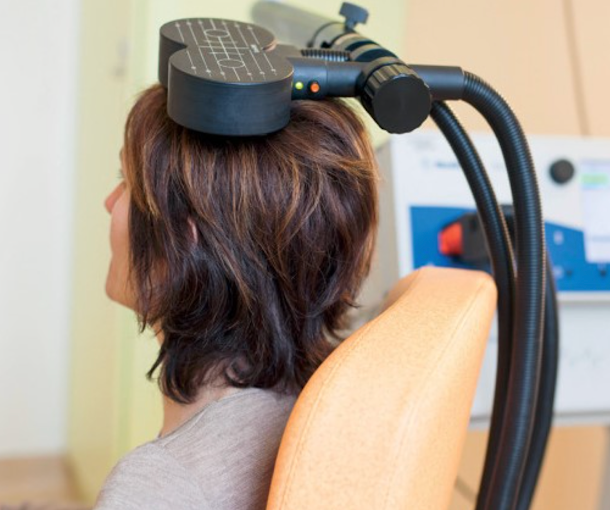

Transcranial magnetic stimulation, or TMS, is being studied as a possible treatment for ADHD. It is not FDA-approved for ADHD, so any use for this condition is off-label. Early research suggests TMS may help some people with attention and focus. The evidence is still limited, and medication and behavioral therapy remain the established first steps. For patients whose ADHD symptoms overlap with depression, anxiety or OCD, TMS may already play a useful role. TMS is FDA-cleared for depression and OCD, and at BrainHealth Solutions we offer it for depression, anxiety and OCD.
Attention-deficit/hyperactivity disorder, or ADHD, is a neurodevelopmental condition. It affects how the brain manages attention, impulse control and activity level. Symptoms usually begin in childhood. For many people, they continue into adulthood.
ADHD typically shows up in three patterns:
Inattentive presentation: trouble staying focused, following through on tasks, organizing work or remembering details.
Hyperactive-impulsive presentation: restlessness, difficulty sitting still, interrupting others or acting without thinking.
Combined presentation: a mix of both patterns.
Brain imaging research has linked ADHD to differences in the prefrontal cortex. This area sits behind the forehead and helps with planning, focus and self-control. Researchers have also found differences in how the brain uses dopamine, a chemical messenger tied to motivation and reward.
ADHD rarely travels alone. Many adults and children with ADHD also live with anxiety, depression, sleep problems or mood conditions. These overlapping conditions can make ADHD harder to diagnose and harder to treat.
Most ADHD treatment plans combine several approaches:
Stimulant medications. These are the most widely used ADHD medications. They increase dopamine and norepinephrine activity in the brain. Many patients see clear improvement in focus and impulse control.
Non-stimulant medications. These are options for patients who do not respond to stimulants, cannot tolerate side effects or have health concerns that make stimulants a poor fit.
Psychotherapy. Cognitive behavioral therapy and skills coaching help patients build routines, manage time and cope with frustration.
Parent training and school support. For children, structure at home and at school often matters as much as medication.
At BrainHealth Solutions, our ADHD includes psychiatric evaluation, medication management and psychotherapy.
These treatments work well for many people. They do not work for everyone. Some patients get only a partial response. Others stop medication because of appetite loss, sleep trouble, mood changes or a racing heart. Some families prefer to avoid daily medication for a child. These gaps are why researchers have started looking at TMS for ADHD: Beyond Traditional Treatment is a fair way to describe that search for new options.
Transcranial magnetic stimulation is a non-invasive brain stimulation treatment. It uses magnetic pulses to activate nerve cells in specific areas of the brain. The magnetic coil rests against the scalp. There is no surgery, no anesthesia and no implanted device.
TMS is FDA-cleared for major depression and for OCD. It has been used in psychiatric care for many years, especially for people whose depression has not improved with medication. Our TMS therapy program uses Magventure technology.
Patients stay awake and alert during treatment. Most return to work, school or driving right after a session. This makes TMS very different from treatments that require sedation or recovery time.
The brain runs on electrical signals. A TMS coil creates a focused magnetic field that passes through the scalp and skull. That field produces a small electrical current in the brain tissue just below the coil.
When pulses are repeated over time, they can change how active a brain region is. They can also change how well that region communicates with other parts of the brain. This process is often called neuromodulation.
The goal is to retrain brain circuits that are underactive or out of balance. In depression, the usual target is the left dorsolateral prefrontal cortex. This region helps regulate mood. In ADHD research, the same general prefrontal area is of interest because it also supports attention and executive function.
TMS does not add a chemical to the body. That is one reason it has drawn interest from patients and families who want a non-drug option or who have struggled with medication side effects.
Repetitive TMS, known as rTMS, delivers a series of pulses in a set pattern. High-frequency rTMS tends to increase activity in the targeted area. Low-frequency rTMS tends to calm activity. Most ADHD studies have tested high-frequency rTMS over the prefrontal cortex.
Another approach uses brain imaging to guide where the coil goes. Every brain is a little different. A spot that is right for one person may be slightly off for another. MRI and functional MRI can map an individual’s brain and locate the target with more precision.
Our SAINT Protocol uses this personalized approach. SAINT® is FDA-cleared for treatment-resistant depression, not ADHD. Its use of individual brain mapping shows where the field of brain stimulation is heading: toward treatment fitted to each person’s brain rather than a single standard target.
Interest in TMS for ADHD comes from a few practical concerns:

Partial response to medication. Some patients improve on medication but still struggle with focus, organization or follow-through.
Side effects. Appetite loss, insomnia, irritability and heart rate changes lead some patients to stop treatment.
Co-occurring conditions. When depression or anxiety sits alongside ADHD, treating one condition can make the other easier to manage.
Preference for non-drug options. Some adults and parents want to explore approaches that do not rely on daily medication.
TMS targets the same brain networks that appear to work differently in ADHD. That makes it a logical area of study. Logical is not the same as proven, though. For now, TMS is a research-stage idea for ADHD, not a replacement for established care.
Research on TMS for ADHD in young people is still small. Most studies include few participants and short follow-up periods. Some have reported improvements in attention and hyperactivity ratings. Others have found little difference compared with sham treatment, which is a placebo version of TMS.
Children’s brains are still developing. That calls for extra care with any brain-based treatment. Researchers are studying the right settings, the right targets and the right number of sessions for younger patients. Until more is known, TMS for ADHD in children should be viewed as investigational.
For children and teens, our services focus on careful diagnosis first. ADHD symptoms can look similar to anxiety, learning differences, sleep problems or mood conditions. Getting the diagnosis right shapes everything that follows.
Adults with ADHD often face a different set of challenges. Many were never diagnosed as children. Many have built coping habits that only partly work. Adult ADHD is also closely linked with depression and anxiety.
Adult studies of TMS for ADHD have shown mixed but encouraging signals in some areas, especially attention. Results vary based on which brain area was targeted, how many sessions were given and how symptoms were measured.
For adults who have both ADHD and depression, TMS may be worth discussing for the depression itself. TMS is FDA-cleared for depression. Improving mood, energy and motivation can make ADHD symptoms easier to manage day to day. In this case, TMS treats the depression, not the ADHD.
Researchers believe TMS may help ADHD symptoms in a few ways:
Boosting prefrontal activity. High-frequency stimulation may increase activity in the prefrontal cortex. This region is often less active in people with ADHD.
Supporting dopamine signaling. Some research suggests prefrontal stimulation may affect dopamine release in deeper brain structures tied to reward and motivation.
Strengthening brain networks. ADHD involves networks that control attention and filter distractions. TMS may improve how these networks coordinate.
These ideas come from what scientists know about ADHD and about how TMS works in other conditions. They are not yet confirmed for ADHD.
The research on TMS for ADHD is early. Here is a fair summary of what it shows so far:
Several small trials have reported improvements in attention or overall ADHD symptom scores after a course of rTMS.
Some trials have found no meaningful difference between real TMS and sham TMS.
Studies differ widely in brain target, pulse frequency, number of sessions and age of participants. This makes it hard to compare results.
Long-term data is limited. Few studies have followed patients for months after treatment ended.
Taken together, the findings justify more research. They do not yet support TMS as a standard ADHD treatment.
TMS has a well-established safety record from its use in depression and OCD. The most common side effects are:
Mild headache
Scalp discomfort or tenderness near the coil
A tapping or clicking sensation during treatment
These effects tend to be mild and often fade after the first few sessions.
ADHD studies so far have reported side effects similar to those seen in depression treatment. Because ADHD studies are small, safety data specific to ADHD, especially in children, is still being gathered.
Several open questions remain before TMS could become a routine ADHD option:
Target and settings. Researchers have not agreed on a single brain area or stimulation pattern for ADHD.
Time commitment. Standard TMS courses for depression usually run about six weeks with frequent sessions. This can be hard for students and working adults.
Durability. It is not yet clear how long any benefit lasts.
Variable response. Like most treatments, TMS appears to help some people more than others.
Access. Because TMS is not FDA-approved for ADHD, availability for this use is limited.
These factors are why any conversation about TMS for ADHD should happen with a psychiatrist who can weigh the full picture.
TMS is not FDA-approved for ADHD. Research is ongoing, and its use for ADHD is considered off-label.
TMS is FDA-cleared for major depressive disorder and for OCD. SAINT® is FDA-cleared for treatment-resistant depression. None of these clearances extend to ADHD.
Patients should be cautious of any provider who presents TMS as a proven ADHD treatment. Our team is direct about this: TMS for ADHD remains an area of study, and established treatments come first.
The future of TMS for ADHD: Beyond Traditional Treatment depends on larger, well-designed trials. Researchers are working on several fronts:
Personalized targeting. Brain imaging may help locate the most effective stimulation site for each patient, similar to how SAINT® maps targets for depression.
Accelerated schedules. Compressed protocols may shorten treatment time. SAINT® delivers its course over five days for depression, and researchers are interested in whether faster schedules could apply to other conditions.
Combined care. TMS may eventually work alongside medication and therapy rather than replacing them.
Better outcome measures. Studies are moving toward real-world measures of focus, work performance and daily function.
Brain imaging is part of how we think about brain health more broadly. Our brain imaging program uses Kernel technology as one of our specialized programs. As research advances, tools that measure brain activity may help match patients to the treatments most likely to help them.
For the conditions where TMS is FDA-cleared, the experience is simple. Patients sit in a comfortable chair and stay awake. They feel a tapping sensation on the scalp and hear a clicking sound. Most people read, talk or rest during treatment.
There is no downtime. Patients can drive themselves and return to normal activities afterward. A full course usually spans several weeks. Accelerated protocols such as SAINT® are shorter.
Any patient considering TMS goes through a psychiatric evaluation first. This helps confirm the diagnosis, review medical history and screen for safety concerns.
Based on current evidence and FDA clearances, TMS is most appropriate for patients with:
Depression, especially depression that has not improved with medication
Anxiety that occurs alongside depression
For people with ADHD, the strongest current case for TMS is when depression or OCD is also present. In that situation, TMS treats a condition it is cleared for. Better mood and energy may make ADHD symptoms easier to manage alongside standard ADHD treatment.
For ADHD alone, TMS remains investigational. Patients interested in this use should understand that the evidence is early and that results are not guaranteed.
The first step is a thorough psychiatric evaluation. Our team, led by Dr. Robert Bota, a Board-Certified Psychiatrist, reviews symptoms, past treatments, medical history and any co-occurring conditions.
From there, our providers build a plan that may include:
Medication management to find the right ADHD medication and dose
Psychotherapy to build skills and coping strategies
TMS for co-occurring depression, anxiety or OCD
Other options such as SAINT® or Spravato for treatment-resistant depression
If a patient asks about TMS specifically for ADHD, our team explains the current evidence, the off-label status and how it compares with established treatment. The goal is a clear, honest plan based on the patient’s own history.
Some small studies show improvements in attention and ADHD symptom scores after TMS. Others show little effect. Results vary by study design, brain target and patient age. TMS is a promising area of research for ADHD, but it is not a proven treatment. Medication and therapy remain the most reliable options today.
TMS has a strong safety record in depression and OCD. Side effects are usually mild, such as headache or scalp discomfort. ADHD studies have reported a similar safety profile. Data for children is more limited.
TMS can be used for ADHD only on an off-label basis or within research studies, because it is not FDA-approved for ADHD. The most practical use today is for patients with ADHD who also have depression or OCD, conditions for which TMS is FDA-cleared. In those cases, TMS supports overall mental health while ADHD is treated with established methods.
TMS is an emerging area of ADHD research, and it is not FDA-approved for ADHD. Early studies are encouraging but small and mixed. Medication and psychotherapy remain the foundation of ADHD care. For patients with ADHD and co-occurring depression, anxiety or OCD, TMS may already offer real value. At BrainHealth Solutions, our team helps each patient weigh these options and build a plan that fits their brain and their goals.